From Patent Landscaping to Technology Intelligence
by Ryan Rozich on July 07, 2008
I get to spend a lot of time with our customers discussing their specific goals, needs and challenges related to IP intelligence. In my first blog post, I’ll expand on Tyron’s last post about the fundamental shifts in the IP industry and discuss what I’ve been hearing that this shift means for IP professionals and their day-to-day responsibilities.
The Evolution of IP Intelligence
I covered a lot of this in a talk that I gave at the PIUG 08 conference a couple months ago. This talk mostly described the expanding role of IP professionals and what data sources and tools can be leveraged to meet the new demands. We started off by defining some terms (both historical and new terms):
- The term patent search has been used for quite some time to describe the practice of finding patents that matched specific criteria – the business cases for these ‘searches’ usually revolved around patentability or prior-art searching.
- A while back, someone coined the term patent landscaping for looking at broader trends such as if patent activity for a given area is increasing/decreasing, etc.
- Moving beyond patent landscaping, many IP professionals are now looking to answer broader technology intelligence questions such as “what is my IP position in this market”, “who are my small/large technology competitors”, “what are the legal/market/IP threats in this area”, “who would be a good partner candidate or in/out license target”, “what are the IP/legal/other risks in partnering or acquiring this company”. These questions go deeper than simple patent searching or even patent landscaping since in order to answer those questions we need to look beyond patent data.
The Current State of Technology Intelligence
Traditionally, performing IP due diligence for M&A, assessing litigation risks, performing licensing analysis or other competitive intelligence analysis involves multiple roles all looking at the question from different perspectives. For example: a legal group might analyze the litigation landscape, IP analysts perform their patent landscaping, marketing groups look at market trends.
Each data source and group comes with its own biases and perspectives - what is needed is a common reference across all groups, competitive intelligence/marketing, legal, professional IP researchers and business stakeholders.
Building a Unified System
Having discussed the need for a unified analysis platform, we next look at what such a system might look like. Many companies have endeavored to put together internal systems to address the shortcomings of many of the vendor tools in the IP space. Most of these tools are spreadsheet-based with a lot of manual data entry involved. Here is a sample list of requirements for such a system:
- First, identify the types of data that we want to analyze and correlate and obtain the data – so the first step is to aggregate data from multiple data sources.
- The next step is that the data needs to be cleaned into a format that lets us cross-correlate the dimensions of data (for instance, we need to know that company A on this patent is the same company that we have business data for, and is the same company that we have this litigation information about), so the next step is to normalize the data in such a way that we can next correlate the many dimensions of data that we have aggregated.
- After that, we need a system that will allow us to group data, count items, and present results back in a visualized manner.
- Finally, the ultimate goal is to create a reusable system that isn’t a one-off spreadsheet for each project but instead is a unified knowledge platform that can be used across business units and roles for any project. This involves some heavy data warehousing, since data about all patents, companies, lawsuits, markets, etc need to be included.
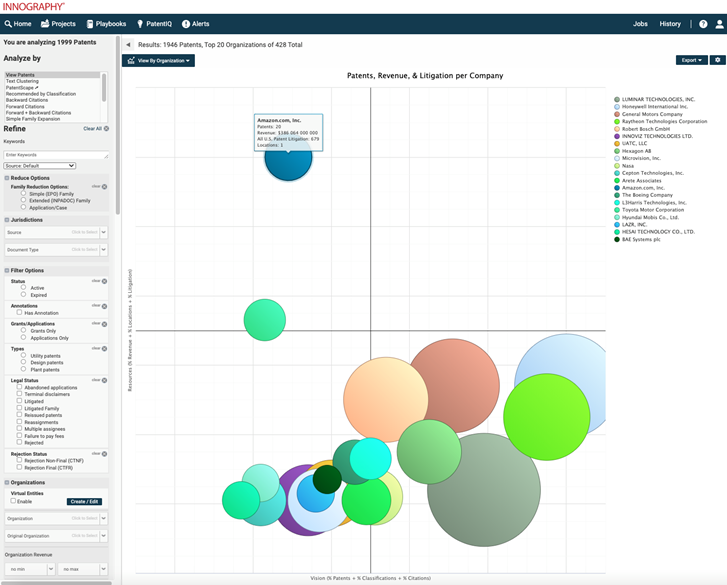
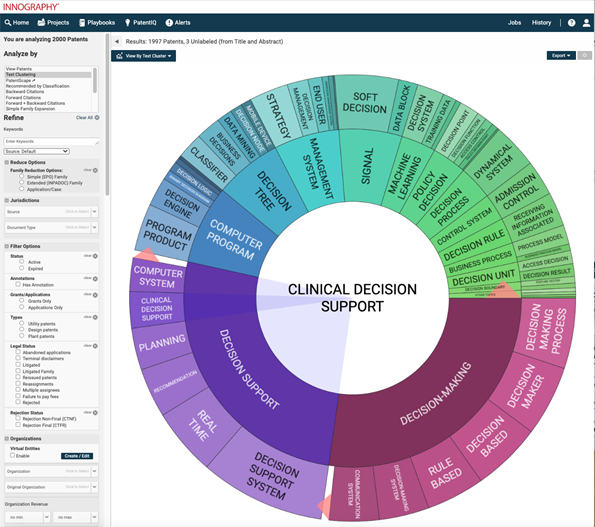
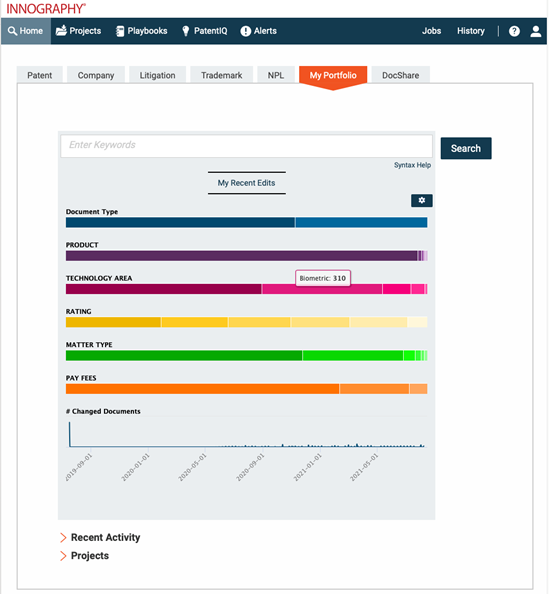
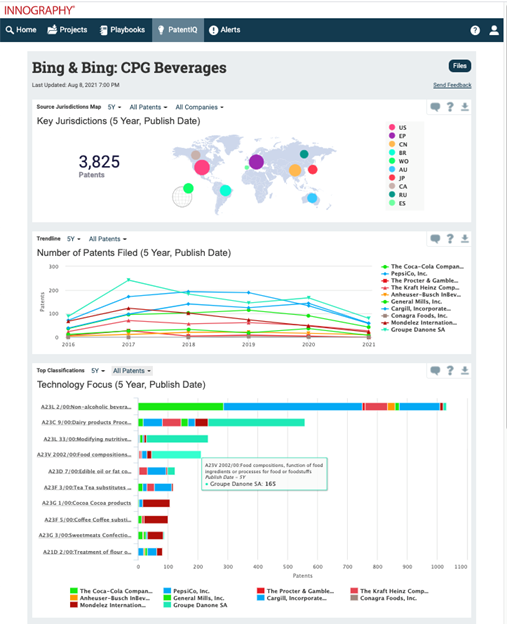
Innography solves many of these issues and it is our goal to be a unified knowledge platform for performing these technology intelligence activities. We aggregate data from over 12 patent and non-patent data sources, normalize and correlate it and then present it in an visual, interactive format so that our users can perform advanced technology intelligence.
As the IP industry continues to mature and IP is managed like a business unit rather than legal documents, the roles of the technology intelligence professionals will continue to expand. The requirements for access to actionable intelligence will become more and more critical for companies looking to protect their IP and proactively monitor opportunities and threats.

There are no comments for this entry yet.
Leave a Reply